


- What is the market cap of all cryptocurrencies
- Are all cryptocurrencies the same
- Do all cryptocurrencies use blockchain
Do all cryptocurrencies use blockchain
At the time of writing, we estimate that there are more than 2 million pairs being traded, made up of coins, tokens and projects in the global coin market https://ripworkoutsale.com. As mentioned above, we have a due diligence process that we apply to new coins before they are listed. This process controls how many of the cryptocurrencies from the global market are represented on our site.
The total crypto market volume over the last 24 hours is $172.65B, which makes a 34.94% increase. The total volume in DeFi is currently $27.22B, 15.77% of the total crypto market 24-hour volume. The volume of all stable coins is now $161.34B, which is 93.45% of the total crypto market 24-hour volume.
One of the biggest winners is Axie Infinity — a Pokémon-inspired game where players collect Axies (NFTs of digital pets), breed and battle them against other players to earn Smooth Love Potion (SLP) — the in-game reward token. This game was extremely popular in developing countries like The Philippines, due to the level of income they could earn. Players in the Philippines can check the price of SLP to PHP today directly on CoinMarketCap.
Welcome to CoinMarketCap.com! This site was founded in May 2013 by Brandon Chez to provide up-to-date cryptocurrency prices, charts and data about the emerging cryptocurrency markets. Since then, the world of blockchain and cryptocurrency has grown exponentially and we are very proud to have grown with it. We take our data very seriously and we do not change our data to fit any narrative: we stand for accurately, timely and unbiased information.

What is the market cap of all cryptocurrencies
Cryptocurrency mining is the process of adding new blocks to a blockchain and earning cryptocurrency rewards in return. Cryptocurrency miners use computer hardware to solve complex mathematical problems. These problems are very resource-intensive, resulting in heavy electricity consumption.
A stablecoin is a crypto asset that maintains a stable value regardless of market conditions. This is most commonly achieved by pegging the stablecoin to a specific fiat currency such as the US dollar. Stablecoins are useful because they can still be transacted on blockchain networks while avoiding the price volatility of “normal” cryptocurrencies such as Bitcoin and Ethereum. Outside of stablecoins, cryptocurrency prices can change rapidly, and it’s not uncommon to see the crypto market gain or lose more than 10% in a single day.
Cryptocurrencies such as Bitcoin feature an algorithm that adjusts the mining difficulty depending on how much computing power is being used to mine it. In other words – as more and more people and businesses start mining Bitcoin, mining Bitcoin becomes more difficult and resource-intensive. This feature is implemented so that the Bitcoin block time remains close to its 10 minute target and the supply of BTC follows a predictable curve.
The Bitcoin market cap is currently 2,044.52 billion. We arrive at this figure by multiplying the price of 1 BTC and the circulating supply of Bitcoin. The Bitcoin price is currently $ 102,926 and its circulating supply is 19.86 million. If we multiply these two numbers, we arrive at a market cap of 2,044.52 billion.
However, not all cryptocurrencies work in the same way. While all cryptocurrencies leverage cryptographic methods to some extent (hence the name), we can now find a number of different cryptocurrency designs that all have their own strengths and weaknesses.
Are all cryptocurrencies the same
This post will explore some of the differences between opposing cryptos. Whether a person prefers Bitcoin, Ethereum, or some other crypto whose name very few people recognize, it is wise to know how that particular cryptocurrency works to avoid being caught off guard.
Some of the currencies need to be mined by solving advanced cryptography tasks, and that requires a lot of knowledge, but also an unlimited power supply because the whole concept of the blockchain is very energy-consuming. Bitcoin is one of the currencies that if you want to earn it by yourself, you need to invest a lot in it. On the other side, coins like Ethereum or Ripple are available in known networks you need to join, so you can earn them. It’s on you to choose what works best for you.
The crypto market is huge, and it follows different rules, but it doesn’t mean it’s the same for all the cryptocurrencies available on it. When we talk about it, the first thing that crosses our minds is Bitcoin and its huge role in the world. It was the first virtual currency launched more than a decade ago, so it’s understandable that people recognize it the most, and it’s possible that most of them can’t name more than two currencies. But, there is a lot more than that – according to many sources, the total number of digital money is 6,955, but some of them failed and aren’t active right now. Another source says that the complete number is around 5,000 and that’s really a lot, knowing that we only recognize barely 10 of them.
Under this system, the code has essentially created the coins. All that’s left is to distribute them. This is done through coin mining. As you might already know, coin mining is the process of verifying transactions and building blocks in Bitcoin’s blockchain. Miners are rewarded for the work they do with new coins.
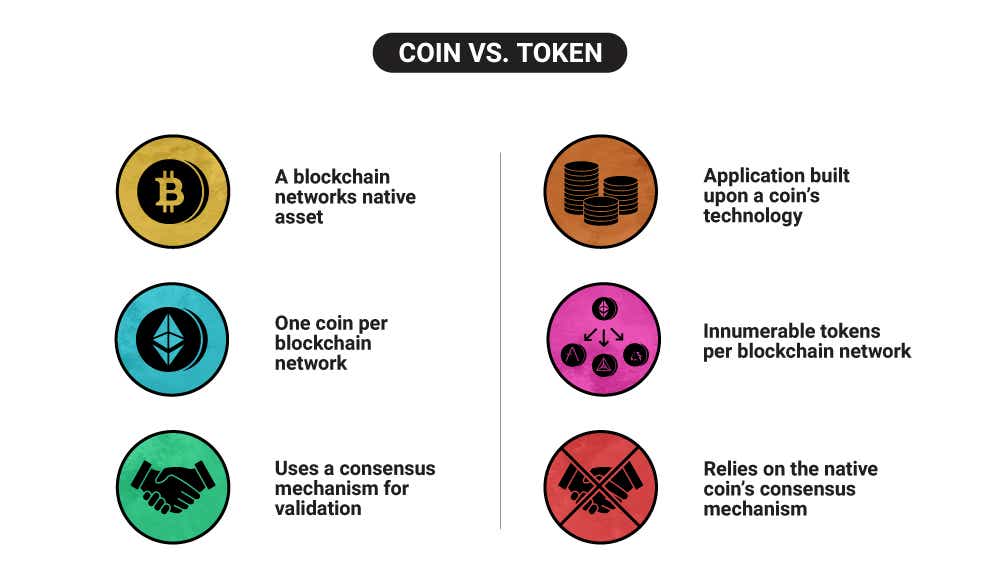
This post will explore some of the differences between opposing cryptos. Whether a person prefers Bitcoin, Ethereum, or some other crypto whose name very few people recognize, it is wise to know how that particular cryptocurrency works to avoid being caught off guard.
Some of the currencies need to be mined by solving advanced cryptography tasks, and that requires a lot of knowledge, but also an unlimited power supply because the whole concept of the blockchain is very energy-consuming. Bitcoin is one of the currencies that if you want to earn it by yourself, you need to invest a lot in it. On the other side, coins like Ethereum or Ripple are available in known networks you need to join, so you can earn them. It’s on you to choose what works best for you.
Do all cryptocurrencies use blockchain
Avalanche is a blockchain platform that has garnered attention as one of the 11 next big cryptocurrencies to secure in July 2023. With its innovative technology and ambitious goals, Avalanche presents significant potential for investors seeking opportunities in the blockchain space.
Transactions on the blockchain network are approved by thousands of computers and devices. This removes almost all people from the verification process, resulting in less human error and an accurate record of information. Even if a computer on the network were to make a computational mistake, the error would only be made to one copy of the blockchain and not be accepted by the rest of the network.
Blockchain can also be used to record and transfer the ownership of different assets. This is currently very popular with digital assets like NFTs, a representation of ownership of digital art and videos.
A blockchain allows the data in a database to be spread out among several network nodes—computers or devices running software for the blockchain—at various locations. This creates redundancy and maintains the fidelity of the data. For example, if someone tries to alter a record on one node, the other nodes would prevent it from happening by comparing block hashes. This way, no single node can alter information within the chain.
Cryptocurrencies and blockchain technology are often regarded as the same thing. This makes it seem like a cryptocurrency cannot exist without an underlying blockchain technology. But is this really the case?
